Bought Views vs Real Engagement: What YouTube Actually Counts
21.09.2026 11:03 · Updated: 27.09.2026 11:11 · 4 views · New
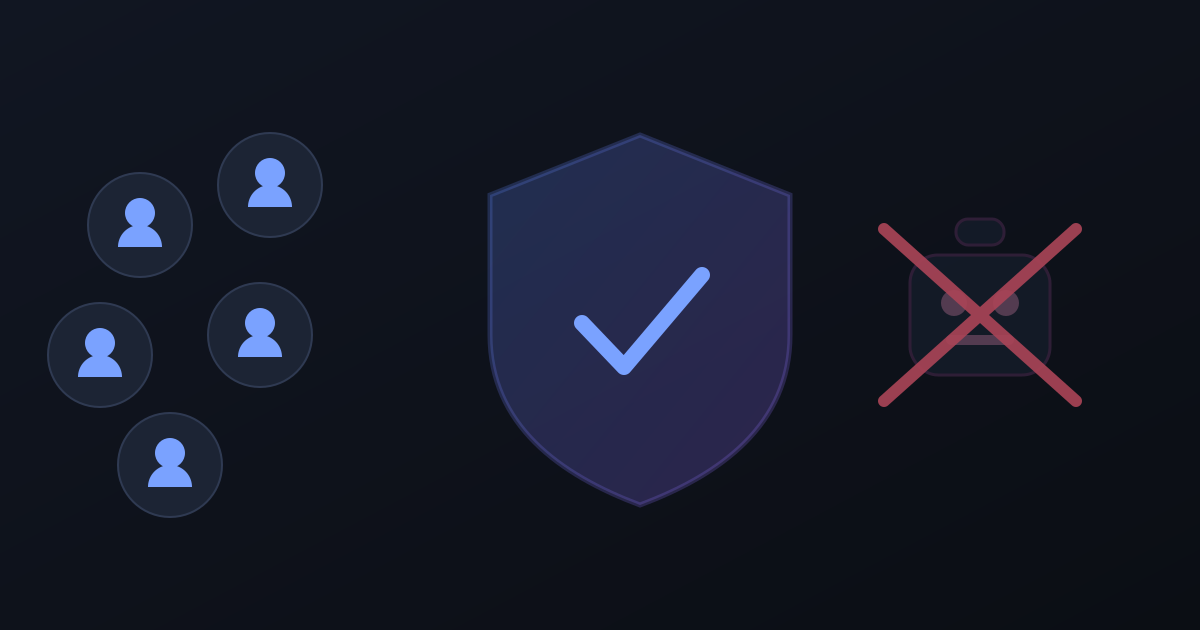
Every creator with a slow channel eventually sees the same ad: ten thousand views for the price of a pizza. It works, in the sense that the number goes up. It also quietly makes the channel worse. This is why.
YouTube does not count views, it counts behaviour
A view is the cheapest thing on the platform to fake, so it is the signal YouTube trusts least. What the system actually looks at is what happens around the view:
- How long someone stayed, and whether they stayed longer than usual for a video of that length.
- Whether they came back to the channel afterwards.
- Whether the people who subscribed then opened the next upload.
- Whether the engagement pattern looks like a human day or like a script.
Bought traffic fails every one of those. It arrives in a burst, leaves in seconds, never returns, and never opens the next video.
The part that actually hurts
The damage is not that the fake views get removed — though many do. The damage is what they teach the system about your channel.
- Average view duration drops. Thousands of two-second visits pull the average down, and that average is one of the strongest inputs into whether your next video gets shown.
- Subscriber quality drops. If 5,000 of your 6,000 subscribers never open anything, the share of subscribers who click on a new upload collapses. YouTube reads that as "this audience does not want more of this".
- Monetisation becomes riskier. Invalid traffic is grounds for rejection or removal from the Partner Program, and the burden of proof is on you.
So you pay money to be shown to fewer people. That is the whole trade.
How to see it in your own analytics
You do not need special tools to spot artificial traffic:
- Analytics → Audience: if returning viewers are near zero while views are high, nothing is sticking.
- Reach → Traffic sources: a large "External" or "Direct/unknown" block that you cannot explain is usually purchased or bot traffic.
- Engagement → Average view duration: a flat line near a few seconds means the audience never actually arrived.
What real engagement looks like instead
Real engagement is slower and unglamorous: someone watches several minutes, leaves a comment that refers to something in the video, and subscribes because they want the next one. That is the pattern YouTube rewards, and the only pattern that compounds.
The hard part is the beginning. A new channel has no audience, so the video is shown to few people, so it gets no audience. That gap is where most channels die — and it is the gap YouCanTube was built to cover.
It is an exchange between real creators, not a shop. You watch other people's videos and give genuine engagement; they do the same for yours. Every interaction creates a debt, so nobody takes without giving. Watch time is measured as real seconds with the sound on, empty comments can be reported, and there is nothing to buy.
Use it as a floor, not a ceiling: enough early engagement that your uploads are not judged on silence, while you build the thing that keeps strangers watching.
Where to put the money instead
- The first 30 seconds. More retention there moves every other number. See how watch hours actually accumulate.
- Thumbnails and titles. The cheapest improvement available: same video, more of the right clicks.
- The second video. A viewer who reaches it is the one who subscribes — the core of growing subscribers.
- Publishing rhythm. Consistency is a signal to both the audience and the system.
If you already bought numbers
Do not panic and do not buy more to "balance" it. Stop the source, keep publishing for real viewers, and let the averages recover as genuine watch time accumulates. Channels do come back from it; what they cannot come back from is doing it every month.
Fake numbers buy you a screenshot. Real engagement buys you a channel.
Try it on your own channel
YouCanTube is a free exchange between real creators: you watch and engage with other channels, and they do the same for yours. No bots, no purchased numbers.
Create a free account Platform rules